
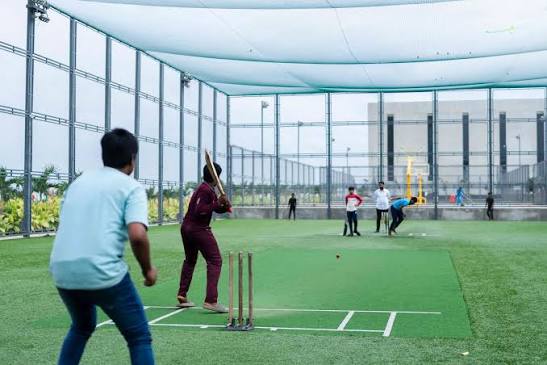

Box cricket is a shorter and more compact version of traditional cricket. It is played inside a small enclosed area surrounded by nets or walls. The format allows people to enjoy cricket without needing a large open ground.
With fewer players, shorter innings, and modified playing rules, box cricket is popular for friendly matches, college events, office tournaments, and weekend games. However, team size, ground dimensions and scoring rules can vary between venues.
What Is Box Cricket?
Box cricket is a small sided cricket format played inside a netted enclosure, where two teams compete to score more runs within a limited number of overs. It usually features five to eight players per team, shorter innings of five to ten overs, and tennis balls, taped tennis balls or soft cricket balls. The enclosed playing area has nets or walls that keep the ball within the court, while modified rules may apply to boundaries, net hits, catches and dismissals.
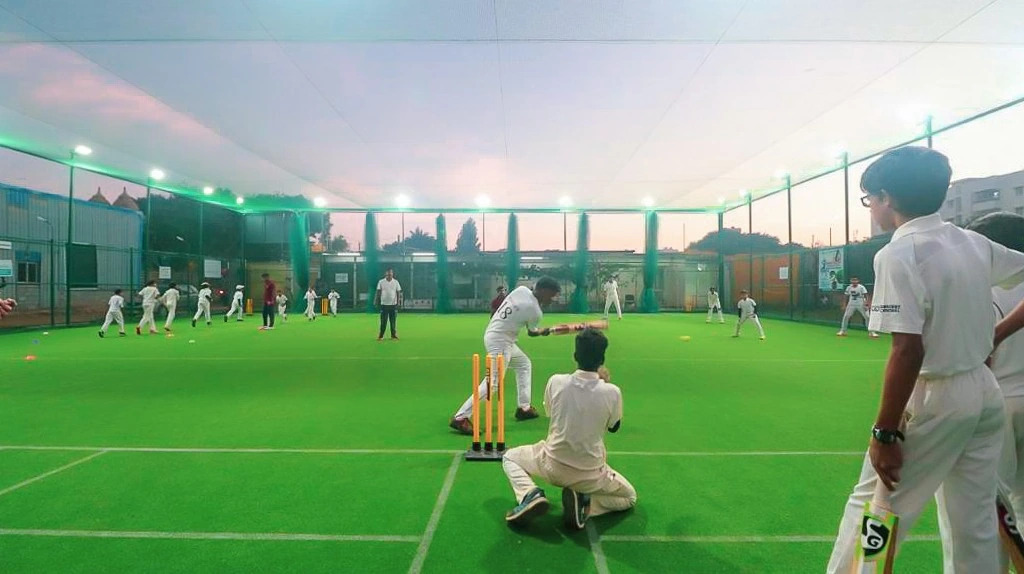
Source: Plato
The smaller ground encourages quick scoring, close fielding and fast decision making. Unlike traditional cricket, box cricket does not follow one universal set of rules, as team size, scoring methods and playing conditions can vary between venues and tournaments.
Why Is Box Cricket Different From Traditional Cricket?
The biggest difference between box cricket and traditional cricket is the playing area. Traditional cricket takes place on a large open field, while box cricket uses a smaller enclosed court. This changes how players bat, bowl and field.
| Feature | Box Cricket | Traditional Cricket |
| Team size | Usually 5 to 8 players | 11 players |
| Playing area | Small enclosed court | Large open ground |
| Ball | Usually tennis or soft ball | Usually leather ball |
| Match length | Commonly 5 to 10 overs | Depends on the format |
| Boundaries | Nets, walls or marked zones | Boundary rope |
| Rules | Often set by the venue | Established Laws of Cricket |
| Playing style | Quick shots and close fielding | More space for varied tactics |
Box cricket also places greater importance on shot placement and quick decision making. A powerful shot is not always the best option because the ball may hit a net or wall and remain in play.
What Is the Box Cricket Ground Size?

Source: Hauled
There is no officially fixed box cricket ground size. Each venue designs its playing area according to the available space, number of players and type of bowling used.
A commonly used recreational setup is around 40 feet wide and 80 feet long. Other grounds may be smaller or larger. Recreational facilities also use dimensions ranging from approximately 30 × 60 feet to 60 × 120 feet.
| Ground Format | Example Dimensions |
| Smaller recreational court | 30 × 60 feet |
| Common recreational court | 40 × 80 feet |
| Larger recreational court | 60 × 120 feet |
| Underarm court | 30 × 50 feet |
These measurements are practical examples, not compulsory dimensions for every box cricket ground.
A typical enclosure includes artificial turf, stumps, a central pitch, side nets and end nets. Some facilities also install a roof net to prevent the ball from leaving the playing area. The height of the enclosure and the distance between the wickets depend on the venue.
Ground size also affects the style of play. A smaller court gives batters less room to place the ball but can make boundaries easier to reach. A larger court provides fielders with more space and creates a different balance between batting and bowling.
If you are booking a turf, check its actual dimensions and playing format before confirming your session.
What Are the Common Rules of Box Cricket?
Box cricket rules depend on the venue or tournament organiser. Most formats have rules for team size, overs, bowling, batting, scoring, dismissals and net hits. Players should understand these conditions before the match because a rule followed at one ground may not apply at another.
Here are some common box cricket rules with examples:
1. Team Size and Number of Overs
Most recreational games use five to eight players per team. Six a side is a common format, while some tournaments allow substitutes. Matches may have five, six, eight or ten overs per innings.
Example: In a six a side match, each team gets six overs to bat. The team with the higher total wins.
2. Bowling Rules
Some venues allow overarm bowling, while others use underarm deliveries. Organisers may also set limits on how many overs one player can bowl. Wides and no balls usually result in penalty runs, although the exact penalty can vary.
Example: A venue may award one extra run for a wide delivery. Another tournament may also apply a free hit after a no ball.
3. Batting and Scoring Rules
Batters can score by running between the wickets, hitting boundaries or reaching marked scoring areas. Some grounds award different runs depending on which net the ball hits. Certain formats also require a batter to retire after reaching a fixed score.
Example: A ground may award four runs when the ball hits a designated side net and six runs when it reaches the back net directly. These values depend on the local scoring system.
4. Catches and Dismissals
Common dismissals include bowled, caught, run out, stumped and hit wicket. However, some box cricket formats remove particular dismissal methods or introduce special catch rules.
Example: A tournament may allow a direct catch but not accept a catch after the ball rebounds from a side net. Some formats also do not allow LBW.
5. Net and Roof Rules
The nets are an important part of box cricket. Depending on the venue, hitting a side net may count as a run, keep the ball in play or result in a dead ball. Roof hits can also have different outcomes.
Example: A venue may count a ball hitting the side net as two runs but declare a roof hit a dead ball. Another venue may use a completely different rule.
6. Result and Tie Breaker
The team with the higher score at the end of both innings wins. If the scores are level, some competitions use a Super Over to decide the result.
Example: If Team A scores 52 runs and Team B also finishes on 52, the match may go to a Super Over if the tournament rules provide for one.
How to Play Box Cricket?
Box cricket is easy to organise once both teams understand the playing conditions. Follow these steps to start a match:
- Divide the players into two balanced teams. A six a side match is a useful starting format for a casual game, provided the venue allows it.
- Agree on the number of overs, team size, bowling style and player rotation. Decide whether every player must bat or bowl.
- Check the scoring zones and rules for side nets, back nets, roof hits, wides, no balls and catches. This prevents disagreements during the match.
- The winning captain chooses whether to bat or bowl first. Both teams should be ready before the innings begins.
- The batting team tries to score as many runs as possible within its allotted overs. The bowling team aims to restrict the score and take wickets.
- After the first innings ends, the teams switch roles. The second team then attempts to chase the target.
- The team with the higher total wins. If the match is tied, follow the agreed tie breaker rules.
What Equipment Is Needed for Box Cricket?
Most recreational box cricket matches need only a few basic items. The venue may provide some or all of the equipment.
- Cricket bat: A suitable cricket bat or plastic bat, depending on the ball and venue.
- Ball: A tennis ball, taped tennis ball or approved soft ball.
- Stumps: A set of stumps and bails for the wickets.
- Sports shoes: Comfortable footwear suitable for artificial turf.
- Protective equipment: Gloves, pads and a helmet may be required, particularly for faster overarm formats.
- Scoreboard: A manual or digital scoreboard helps track runs, wickets and overs.
Players should check the playing surface and footwear rules before entering the enclosure. Metal spikes may not be allowed on artificial turf.
Tips to Play Box Cricket Better
A smaller ground rewards players who make quick decisions and use the available space well. These tips can help beginners and regular players improve their performance.
- Focus on placement: Look for gaps instead of trying to hit every delivery hard.
- Play according to the nets: Learn how the side and back nets affect scoring before choosing your shots.
- Call runs clearly: Quick communication helps prevent run outs.
- Bowl with control: Avoid unnecessary wides and focus on a consistent line and length.
- Stay alert while fielding: Players are close together, so call for catches and avoid collisions.
- Know the rules first: Confirm the roof, rebound and boundary rules before the first delivery.
FAQs
A box cricket team commonly has five to eight players. Six a side is a popular recreational format, although the exact number depends on the venue or tournament.
There is no officially standardised ground size. A 40 × 80 feet enclosure is a commonly used recreational example, while smaller and larger grounds are also available.
Many matches use five, six, eight or ten overs per innings. The organiser decides the number based on the match duration and tournament format.
Tennis balls, taped tennis balls and soft cricket balls are commonly used. The choice depends on the venue, bowling style and safety requirements.
LBW is not allowed in some box cricket formats, but the rule is not universal. Players should check the venue or tournament regulations before the match.
Conclusion
Box cricket brings the excitement of cricket to a smaller and more accessible playing area. It usually features fewer players, shorter innings and special rules for nets, boundaries and dismissals. A 40 × 80 feet court and six a side teams are common recreational examples, but neither is compulsory everywhere.
Before playing, confirm the ground size, number of overs, bowling restrictions, scoring zones and dismissal rules. Once everyone understands the format, box cricket offers a quick and enjoyable way to play the game with friends, colleagues or teammates.